Wednesday, November 27, 2013

Styles of Tennis Courts


Different styles of tennis court will greatly affect the way that tennis players control the match and how players prepare. Every court is different and the different styles mean that professional players have to adapt their talents between every competition. However, the differences in tennis courts may not be as apparent to the fans. A fan only needs to understand the basics, such as the few defining characteristics of each type of court.
Hard top courts are now the most recognizable courts and the most accessible courts to the amateur player. They are easier to maintain and are reliable, and can be built in a public setting without risking damage to the court. The ball moves at a medium speed on hard courts, and will typically follow a more predictable pattern as hard courts do not have the hidden imperfections of a grass court. Hard courts are the best courts for beginners and are easy to find.

Grass courts are perhaps the most iconic courts, and come with unique game play that cannot be found on another types of surface. Grass is likely the fastest court that players routinely use, and seems to be the most volatile. The grass itself plays a huge part of the match, as grass length, stiffness, and density will all affect how the ball flies across the court. Balls bounce less and more sporadically, so it is very common to see a ball take a wild bounce and cause a player to miss a shot.

Clay, another very common surface type, is used in professional matches across the world. Clay surfaces are typically the slowest, creating longer matches that use far more defense. As the ball moves slower across the court, players find it more difficult to outpace their opponent and so must play longer to exploit weaknesses. Professional matches can take several hours when playing on a clay court, especially if opponents are equally skilled.

While other surfaces are also used, such as carpet, most amateur players will find hard top surfaces or perhaps clay and grass. Furthermore, the professional matches favor grass, clay, and hard top so most fans will see matches played on these courts. More information on court surfaces on their affect on the game, along with tennis news and discussion, can be found the homepage of Tom Phanco.

Thursday, November 21, 2013

ATP men's tennis rankings: Rafael Nadal stays on top

Image Source: telegraph.co.uk


Rafael Nadal ended 2013 at the top seed of the male circuit of the ATP Tour. After a few gap months of being forced out of courts by injury, the Mallorcan secured a stellar comeback, even as fit and favorite Serb Novak Djokovic breathed down his neck.

With 13, 030 points Nadal went on to overtake other players, namely: Serbia’s Djokovic with 12, 260 seeded second, Spain’s David Ferrer 3rd with 5,800 points, Scotland’s Andy Murray with 5790 at 4th, and Argentina’s Juan Martin del Potro with 5,255 closing out the top five. Meanwhile, Switzerland’s Roger Federer, Czech Republic’s Tomas Berdych, Switxerland’s Stanislas Wawrinka, France’s Richard Gasquet, and Jo-wilfried Tsonga all came in 6th, 7th, 8th, 9th, and 10th respectively.


Image Source: upi.com


Fondly called ‘Rafa’ in the tennis world, the 27-year-old Nadal is an on-court leftie but is right-handed when he writes. Inspired by his Uncle Toni, who is now his coach, Rafa’s natural talent for the sport emerged at the young age of four. He used to play two-handed on both sides before switching to a ripping left-handed forehand. Being a southpaw, as can be attested by players of such handedness before him, has its tactical advantages.

The Biography Channel discovered that the tennis player was 12 years when he won the Spanish and European tennis titles in his age group. At 15, he turned pro. By 16 years old, he had reached the semifinals of the Boy’s Singles tournament at Wimbledon. A year after, the Spanish player was named the youngest man to reach the third round at Wimbledon since Boris Becker.

Rafa’s love for tennis is evident in his recorded success. However, when it comes to life, he is not nailed within the lines. He bluntly puts it this way: “It’s only a tennis match. At the end, that's life. There are much more important things.”


Image Source: mirror.co.uk


I’m Tom Phanco, overthinking every inch of the tennis court and its competitive circuits. Follow me on Twitter for more interesting features about the sport.

Saturday, November 2, 2013

Choosing your arm extension


Image Source: commons.wikimedia.org


Most amateurs believe that choosing a tennis racquet is no more than picking one up at an athletic equipment store. This is acceptable only if you’ve never played a match in your life. However, for professionals and club mainstays, there’s a laboratory precision to it.

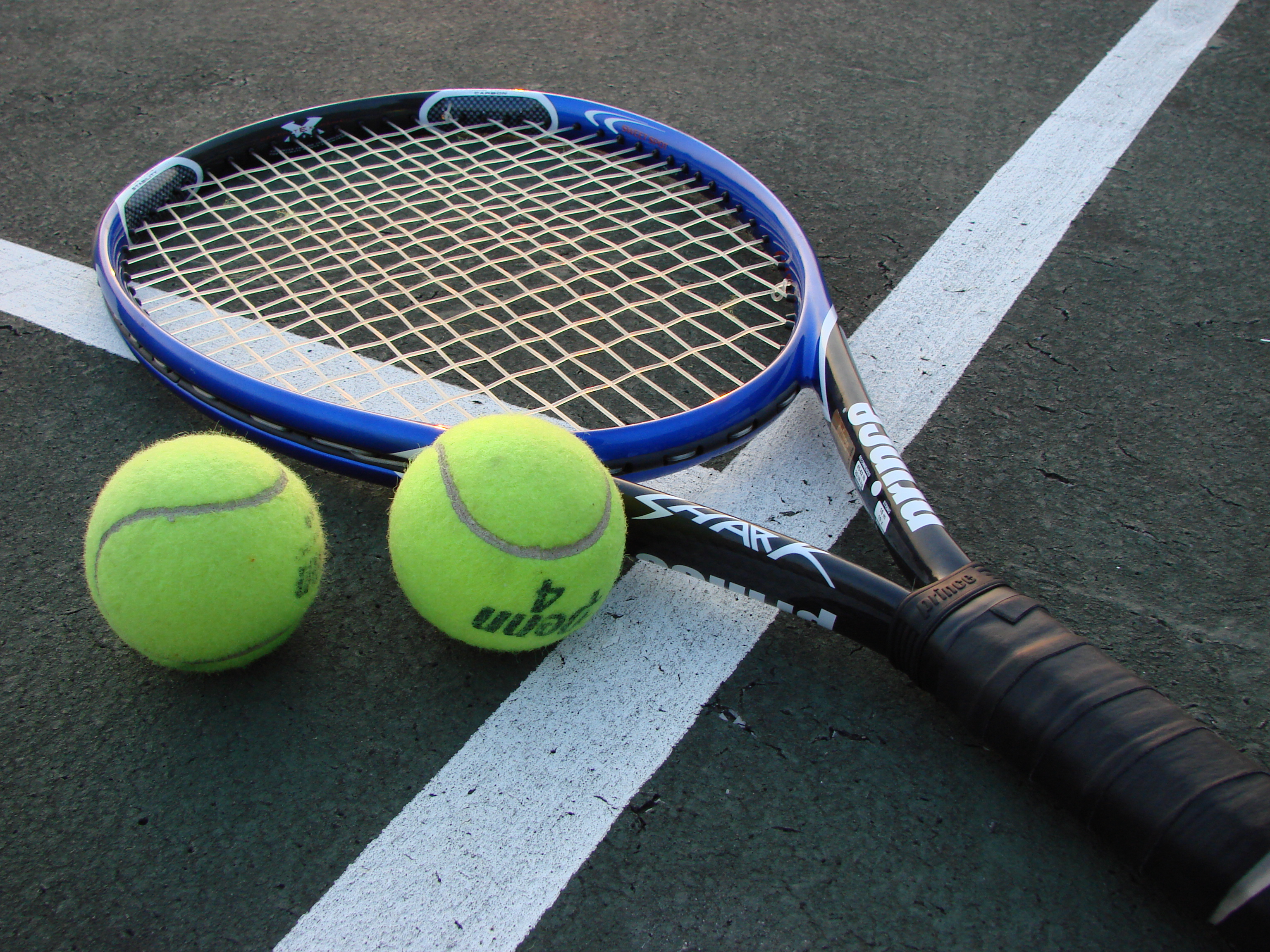
There are three things to consider when choosing the right tennis racquet: head size, length, weight/balance, frame stiffness, string pattern, and grip systems.


Image Source: telegraph.co.uk


Racquets with wider heads naturally offer a larger hitting area and more chances of hitting the sweet spot (the center part that comes in contact with the ball). A racquet’s length determines reach and also provides additional serving leverage. Its weight and balance influence that “feel,” which is adapted to individual players’ skills and preference. Lighter racquets are for rapid grip changes and shot variety, while heavier ones are instrumental in plowing power strokes.

Frame stiffness also affects a racquet’s power potential, with stiffer racquets providing more power at the expense of ball control and vice versa. String patterns (density), on the other hand, are often overlooked by recreational tennis players, despite their direct importance to an important component of a winning game: spin.

Choosing a tennis racquet is preceded by a determination of your type of play. Partisans of positional tennis grab light, finely strung racquets that suit the range of their shots. The power hitters stock up on burly, heavy duty racquets loaded with the weight that barrels the follow-through. If you have been neither working out nor looking like Rafael Nadal or Serena Williams, a lighter racquet is your best bet.


Image Source: hongkongtennisacademy.com


I’m Tom Phanco and tennis is one of my greatest joys. Visit this Twitter page for more links and articles about the sport.